 Inception is not the savior of all cinema. It's a good movie. It's an even better action movie. But what else is it? Sure, as I stated in my five star review, it's intelligent and complex and we don't get that much in movies anymore, especially summer ones, but it kind of stops there. Maybe if people wouldn't have built it up as something to be compared to the second coming of Christ before they had even seen it than it would have had a deeper impact on me. When I'm looking for action and confronted with psychology, I'm intrigued. When I'm looking for psychology and confronted with action and fractured narrative, I'm entertained. See the difference?
In fact, Inception may be, now upon thinking about it, the most self-reflexive movie I can think of that forecasts its own shortcomings. Like it's hero Cobb it breaks it's own rules and becomes the victim of it's own psychobabble. One of Cobb's musings within the film is that an idea is like a parasite that is impossible to kill. It will simply latch onto the brain and grow until it has consumed the person's entire life. It's funny then that the film itself wouldn't heed its own ponderings. The film is, narratively speaking, ultimately rendered too mechanical because it focuses on an idea that seems to consume the every aspect of its telling.
The idea is that dreams can be entered and manipulated; that they have different layers and levels and such. The film's dialogue concentrates so heavily on talking about dreams and explaining different forms of dream logic, and discussing different waking mental states and philosophies about the nature between dream and reality and how it is possible for one to corrupt and consume the other, that by the time it is over we know everything about dreams but next to nothing about the characters in the film or what they are doing. As Jim Emerson and David Edlestein have rightly criticized, the entire film is more a narrative maze than an involving meditation of the division between dream and reality.
It's ironic then that this hasn't been a problem with past Nolan films. In his two best films The Dark Knight and The Prestige Nolan also created films about ideas and such but the difference was that the ideas were represented by the characters as opposed to the characters being at the service of the idea. Thus, to understand the idea was to understand the character. So when Nolan drew in ponderings on Darwinian order in The Prestige or created the Joker as a Freudian study in the uncanny in The Dark Knight, that was a way in order to help us understand the character while also digging deeper into the overall thematic elements. The Joker was so scary because his ideas about society and chaos and evil were ultimately human and thus we understood the psychology of his character on a ground level and could relate to him as such. But once we understand the nature of dreams in Inception, what are we left with but a bunch of masterful action sequences and a trick ending?
Interesting enough, Jim Emerson wrote yet another of his anti-Inception posts in which he starts the article off with an interesting quote from Stephanie Zacharek that states, "If the career of Christopher Nolan is any indication, we've entered an era in which movies can no longer be great. They can only be awesome, which isn't nearly the same thing."
She's absolutely right, about Inception and Memento anyway. Inception is an awesome technical tour-de-force and that's what I awarded my five stars based on. As an action movie it's about as good as they come. However, as the saviour of cinema, Inception is a false prophet.
Inception is not the savior of all cinema. It's a good movie. It's an even better action movie. But what else is it? Sure, as I stated in my five star review, it's intelligent and complex and we don't get that much in movies anymore, especially summer ones, but it kind of stops there. Maybe if people wouldn't have built it up as something to be compared to the second coming of Christ before they had even seen it than it would have had a deeper impact on me. When I'm looking for action and confronted with psychology, I'm intrigued. When I'm looking for psychology and confronted with action and fractured narrative, I'm entertained. See the difference?
In fact, Inception may be, now upon thinking about it, the most self-reflexive movie I can think of that forecasts its own shortcomings. Like it's hero Cobb it breaks it's own rules and becomes the victim of it's own psychobabble. One of Cobb's musings within the film is that an idea is like a parasite that is impossible to kill. It will simply latch onto the brain and grow until it has consumed the person's entire life. It's funny then that the film itself wouldn't heed its own ponderings. The film is, narratively speaking, ultimately rendered too mechanical because it focuses on an idea that seems to consume the every aspect of its telling.
The idea is that dreams can be entered and manipulated; that they have different layers and levels and such. The film's dialogue concentrates so heavily on talking about dreams and explaining different forms of dream logic, and discussing different waking mental states and philosophies about the nature between dream and reality and how it is possible for one to corrupt and consume the other, that by the time it is over we know everything about dreams but next to nothing about the characters in the film or what they are doing. As Jim Emerson and David Edlestein have rightly criticized, the entire film is more a narrative maze than an involving meditation of the division between dream and reality.
It's ironic then that this hasn't been a problem with past Nolan films. In his two best films The Dark Knight and The Prestige Nolan also created films about ideas and such but the difference was that the ideas were represented by the characters as opposed to the characters being at the service of the idea. Thus, to understand the idea was to understand the character. So when Nolan drew in ponderings on Darwinian order in The Prestige or created the Joker as a Freudian study in the uncanny in The Dark Knight, that was a way in order to help us understand the character while also digging deeper into the overall thematic elements. The Joker was so scary because his ideas about society and chaos and evil were ultimately human and thus we understood the psychology of his character on a ground level and could relate to him as such. But once we understand the nature of dreams in Inception, what are we left with but a bunch of masterful action sequences and a trick ending?
Interesting enough, Jim Emerson wrote yet another of his anti-Inception posts in which he starts the article off with an interesting quote from Stephanie Zacharek that states, "If the career of Christopher Nolan is any indication, we've entered an era in which movies can no longer be great. They can only be awesome, which isn't nearly the same thing."
She's absolutely right, about Inception and Memento anyway. Inception is an awesome technical tour-de-force and that's what I awarded my five stars based on. As an action movie it's about as good as they come. However, as the saviour of cinema, Inception is a false prophet.

Showing posts with label Christopher Nolan. Show all posts
Showing posts with label Christopher Nolan. Show all posts
Wednesday, July 21, 2010
Why Inception Didn't Save the Movies
Inception is not the savior of all cinema. It's a good movie. It's an even better action movie. But what else is it? Sure, as I stated in my five star review, it's intelligent and complex and we don't get that much in movies anymore, especially summer ones, but it kind of stops there. Maybe if people wouldn't have built it up as something to be compared to the second coming of Christ before they had even seen it than it would have had a deeper impact on me. When I'm looking for action and confronted with psychology, I'm intrigued. When I'm looking for psychology and confronted with action and fractured narrative, I'm entertained. See the difference?
In fact, Inception may be, now upon thinking about it, the most self-reflexive movie I can think of that forecasts its own shortcomings. Like it's hero Cobb it breaks it's own rules and becomes the victim of it's own psychobabble. One of Cobb's musings within the film is that an idea is like a parasite that is impossible to kill. It will simply latch onto the brain and grow until it has consumed the person's entire life. It's funny then that the film itself wouldn't heed its own ponderings. The film is, narratively speaking, ultimately rendered too mechanical because it focuses on an idea that seems to consume the every aspect of its telling.
The idea is that dreams can be entered and manipulated; that they have different layers and levels and such. The film's dialogue concentrates so heavily on talking about dreams and explaining different forms of dream logic, and discussing different waking mental states and philosophies about the nature between dream and reality and how it is possible for one to corrupt and consume the other, that by the time it is over we know everything about dreams but next to nothing about the characters in the film or what they are doing. As Jim Emerson and David Edlestein have rightly criticized, the entire film is more a narrative maze than an involving meditation of the division between dream and reality.
It's ironic then that this hasn't been a problem with past Nolan films. In his two best films The Dark Knight and The Prestige Nolan also created films about ideas and such but the difference was that the ideas were represented by the characters as opposed to the characters being at the service of the idea. Thus, to understand the idea was to understand the character. So when Nolan drew in ponderings on Darwinian order in The Prestige or created the Joker as a Freudian study in the uncanny in The Dark Knight, that was a way in order to help us understand the character while also digging deeper into the overall thematic elements. The Joker was so scary because his ideas about society and chaos and evil were ultimately human and thus we understood the psychology of his character on a ground level and could relate to him as such. But once we understand the nature of dreams in Inception, what are we left with but a bunch of masterful action sequences and a trick ending?
Interesting enough, Jim Emerson wrote yet another of his anti-Inception posts in which he starts the article off with an interesting quote from Stephanie Zacharek that states, "If the career of Christopher Nolan is any indication, we've entered an era in which movies can no longer be great. They can only be awesome, which isn't nearly the same thing."
She's absolutely right, about Inception and Memento anyway. Inception is an awesome technical tour-de-force and that's what I awarded my five stars based on. As an action movie it's about as good as they come. However, as the saviour of cinema, Inception is a false prophet.

Inception
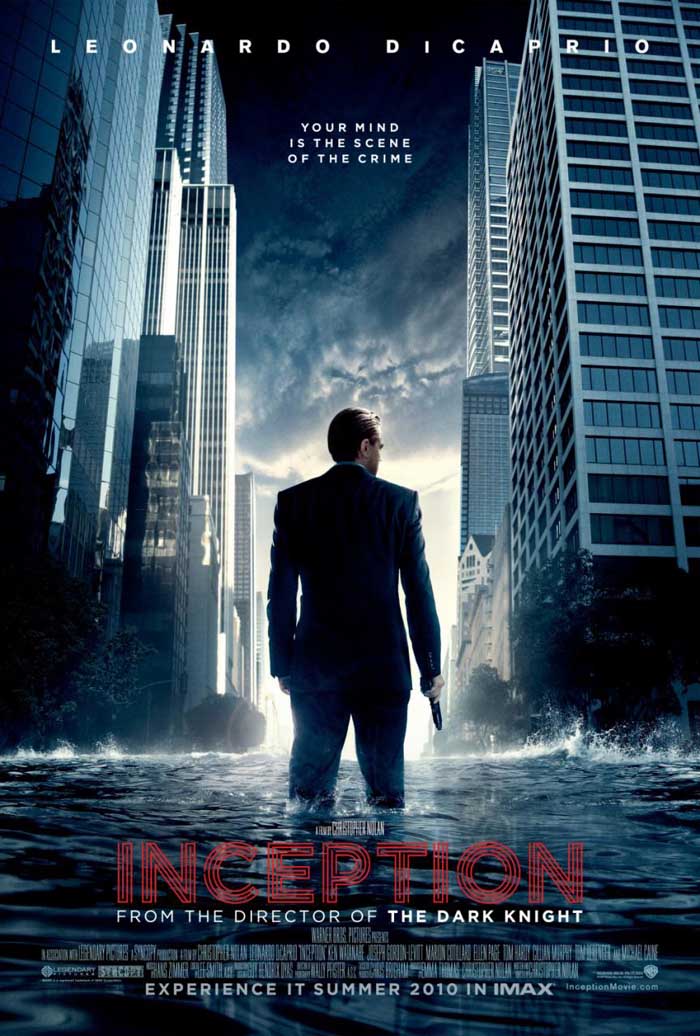 Inception is best appreciated as an action movie. That is, after all, what it is. Sure it’s so complex that it folds in and upon itself time and again; it chews on endless psychobabble about dreams and unconsciousness and how reality and dream can overlap and be mistaken and replace each other and, on top of all that, it swims with all of director Christopher Nolan’s thematic stand-bys: Freud, Darwin, Jung. But really what it does first and foremost is satisfy Godard’s inkling that you only need two things to make a movie: a girl and a gun. In terms of girls and guns, Inception's just about got ‘em all beat.
Although the plot is complex by definition and trying to explain its every nuance here would be a near impossibility the concept is relatively simple: Inception is almost the exact same movie as Nolan’s The Prestige except, instead of a trick within a trick within a trick it deals with a dream within a dream within a dream. I guess Renoir was right when he said that filmmakers are destined to make the same film over and over again. Think about it: both films are about men driven to extremes by the death of the women they love; both deal in threes; both have characters that exist in worlds where fiction and reality are easily confused; both feature men who are consumed by the unreal; both are about extracting secret information from a nemesis; and both end on the same ambiguous thematic note. This time there’s just more boom boom along the way.
So anyway, here goes: Leonard Dicaprio plays Cobb a man who uses futuristic technology to build dream worlds for his enemies, go into them and steal secret information from them while they don’t know that in reality, they are somewhere dreaming. The dream can, as we are shown in the confounding opening sequence that throws us headlong into the plot, can exist on multiple levels of consciousness in which the dreamer can be taken into another dream.
Cobb used to be a great architect until the death of his wife, which forced him to flee the country. Problem is, she keeps appearing in the dreams because he can’t let her go. It’s possible, you see, for a person in the dream to reflect their own subconscious memories and so therefore Cobb hires Airadne (Ellen Page) to build the dream worlds for him because, if he doesn’t know the layout, it will be harder for Moll (Marian Cotillard) to find them when they are in the process of an excavation and ruin everything.
The newest job is risky because it involves not extraction but inception: going into a persons head and planting an idea, which will grow into a reality and consume their life. This is to help businessman Saito (Ken Wantanabe) take over his competition. The mechanics of the plot can be, from here on in, left up to the viewer to discover.
What’s incredible about Inception is what an assured big budget filmmaker Christopher Nolan has become. Inception is the kind of film every filmmaker dreams of making but only gets the chance to after they’ve broken half a billion at the box office or won an Oscar. It’s a personal, affecting film, filled to the brim with intelligence and interesting ideas. There was once a time when movies were based on original concepts and made by great filmmakers who not only knew how to entertain, but trusted the audience enough not only to be able to follow along but want to. Avatar was such a film last year. Now Inception is another.
However, like all personal films by filmmakers who have found the power to not be pushed around by studios, Inception isn’t perfect. Like Nolan’s monumental The Dark Knight, the story is most interesting after it gets on with setting up context and explaining itself. A lot of the dialogue that relates specifically to dreams sounds more like psychology 101 lectures than actual talk, but once the story gets in motion and feels comfortable rolling forward, it’s nothing short of big budget, edge-of-your-seat excitement that is second to none.
Nolan’s greatest asset as the architect of this story is in his ability to juggle three or four levels of reality at the same time without confusing the plot and does a brilliant job of showing how, when something happens in one dream state, it affects what is going on in another, as is the case with the film's very best sequence in a hallway corridor without gravity. It’s an action sequence for the books. Inception may not be the saviour of all cinema as some predicted it to be but it certainly is the best action movie out there right now. It may even be the best action movie since The Dark Knight. That’s no small feat.
Inception is best appreciated as an action movie. That is, after all, what it is. Sure it’s so complex that it folds in and upon itself time and again; it chews on endless psychobabble about dreams and unconsciousness and how reality and dream can overlap and be mistaken and replace each other and, on top of all that, it swims with all of director Christopher Nolan’s thematic stand-bys: Freud, Darwin, Jung. But really what it does first and foremost is satisfy Godard’s inkling that you only need two things to make a movie: a girl and a gun. In terms of girls and guns, Inception's just about got ‘em all beat.
Although the plot is complex by definition and trying to explain its every nuance here would be a near impossibility the concept is relatively simple: Inception is almost the exact same movie as Nolan’s The Prestige except, instead of a trick within a trick within a trick it deals with a dream within a dream within a dream. I guess Renoir was right when he said that filmmakers are destined to make the same film over and over again. Think about it: both films are about men driven to extremes by the death of the women they love; both deal in threes; both have characters that exist in worlds where fiction and reality are easily confused; both feature men who are consumed by the unreal; both are about extracting secret information from a nemesis; and both end on the same ambiguous thematic note. This time there’s just more boom boom along the way.
So anyway, here goes: Leonard Dicaprio plays Cobb a man who uses futuristic technology to build dream worlds for his enemies, go into them and steal secret information from them while they don’t know that in reality, they are somewhere dreaming. The dream can, as we are shown in the confounding opening sequence that throws us headlong into the plot, can exist on multiple levels of consciousness in which the dreamer can be taken into another dream.
Cobb used to be a great architect until the death of his wife, which forced him to flee the country. Problem is, she keeps appearing in the dreams because he can’t let her go. It’s possible, you see, for a person in the dream to reflect their own subconscious memories and so therefore Cobb hires Airadne (Ellen Page) to build the dream worlds for him because, if he doesn’t know the layout, it will be harder for Moll (Marian Cotillard) to find them when they are in the process of an excavation and ruin everything.
The newest job is risky because it involves not extraction but inception: going into a persons head and planting an idea, which will grow into a reality and consume their life. This is to help businessman Saito (Ken Wantanabe) take over his competition. The mechanics of the plot can be, from here on in, left up to the viewer to discover.
What’s incredible about Inception is what an assured big budget filmmaker Christopher Nolan has become. Inception is the kind of film every filmmaker dreams of making but only gets the chance to after they’ve broken half a billion at the box office or won an Oscar. It’s a personal, affecting film, filled to the brim with intelligence and interesting ideas. There was once a time when movies were based on original concepts and made by great filmmakers who not only knew how to entertain, but trusted the audience enough not only to be able to follow along but want to. Avatar was such a film last year. Now Inception is another.
However, like all personal films by filmmakers who have found the power to not be pushed around by studios, Inception isn’t perfect. Like Nolan’s monumental The Dark Knight, the story is most interesting after it gets on with setting up context and explaining itself. A lot of the dialogue that relates specifically to dreams sounds more like psychology 101 lectures than actual talk, but once the story gets in motion and feels comfortable rolling forward, it’s nothing short of big budget, edge-of-your-seat excitement that is second to none.
Nolan’s greatest asset as the architect of this story is in his ability to juggle three or four levels of reality at the same time without confusing the plot and does a brilliant job of showing how, when something happens in one dream state, it affects what is going on in another, as is the case with the film's very best sequence in a hallway corridor without gravity. It’s an action sequence for the books. Inception may not be the saviour of all cinema as some predicted it to be but it certainly is the best action movie out there right now. It may even be the best action movie since The Dark Knight. That’s no small feat.
Saturday, July 17, 2010
Buying into the Hype: Why It Doesn't Matter if Inception is Any Good
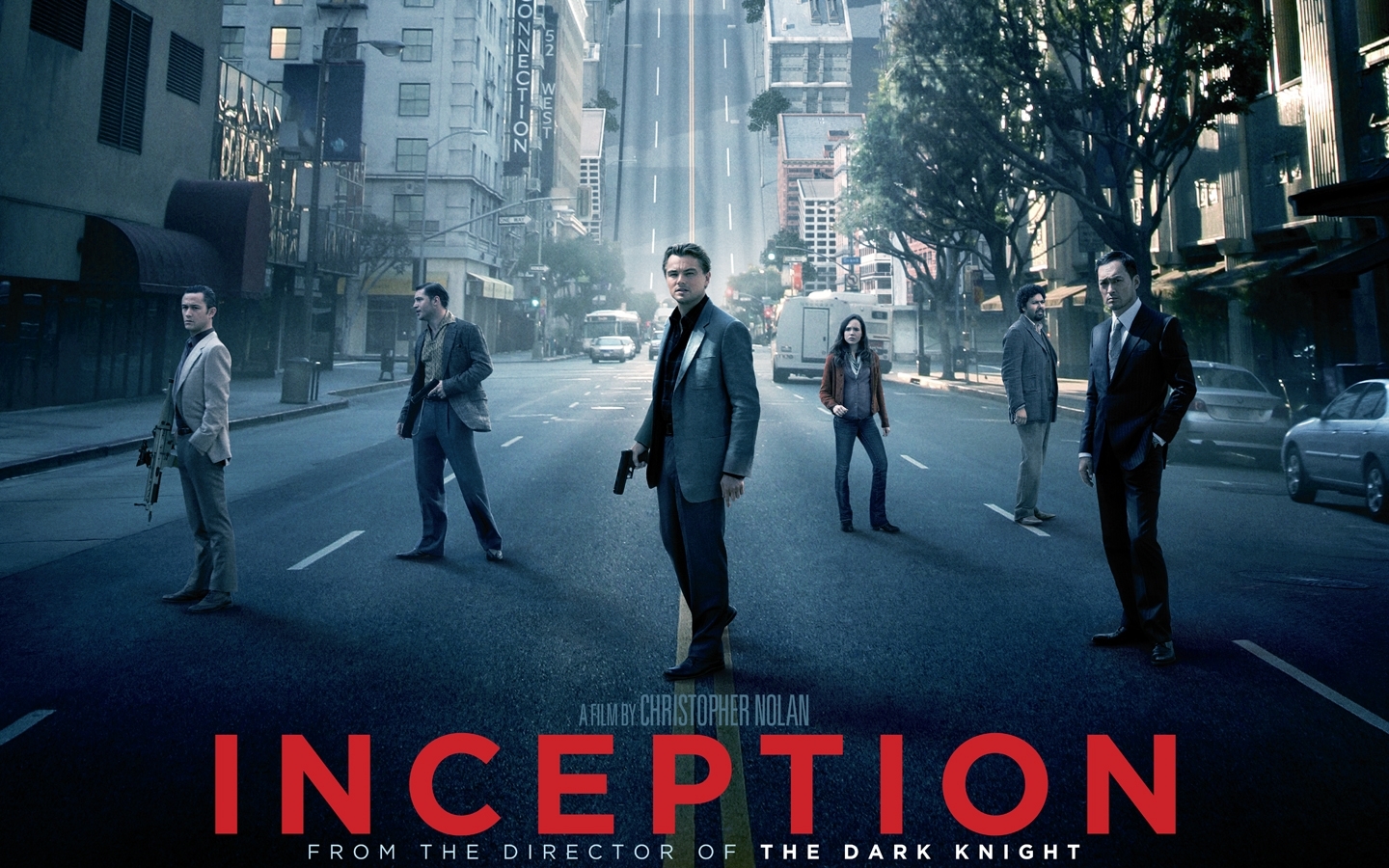 The point of advertising is to try convince the consumer that they want something that they don't necessarily need. Movie advertising is kind of the same way: it's to convince people that a movie is maybe better than it actually is. And truth be told, on some occasions, the movies linked to the ads are about as good as we hope they are.
But look at District 9. Last summer I was travelling through Pennsylvania where we stopped at a McDonald's for lunch and, on the side of my drink cup, was an alien with an X through it and a logo that said No Alien Zone or something like that. I had no idea what District 9 was about at the time (only knew of it by name) but in that moment I translated that clever bit of advertising into expectation of a great movie. After all, a movie advertised this cleverly must be just as clever no? Well District 9 was clever, but not enough to be more than simple summer entertainment. However, by that point it didn't matter if the movie was good or not. The hype machine has spun its wheels and the ads had done their job and people, despite the film's many misgivings, was deemed to be great.
I hate basing my expectations for movies off of ads and trailers and whatever other lines we are fed before the mass public has even gotten a chance to see it. Although I expect Inception to be a great film, I will still go into it this Tuesday with a blank critical slate. I want it to be great, but I'm prepared for it not to be as well. A lot of bloggers are saying it is in fact great. Some of these people I respect and some I don't. One critic who I do respect, David Edelstein, said it wasn't. He didn't like The Dark Knight either. That's fair. Even though I thought the Dark Knight was the best film of the year two years ago, in a sense, I had more respect for Edelstein for turning in a negative review, losing the film its 100% rating on Rotten Tomatoes, because it showed that he had at least stopped and thought through the movie. He's not a contrarian critic like say Armond White. If David Edelstein says a movie doesn't work he must have (his own) good reasons.
I haven't read the Inception review in question yet because I don't read any in full before I have my own on paper, but here's the point: Edelstein was hung out to dry by both peers and viewers alike for his review of the Dark Knight. He's caught flack again for his Inception review (despite it now only sitting at 83% on RT). But why? Just because everyone says Inception is a great movie, Edelstein is a lousy critic for looking inside himself and not finding reasons to agree? The problem is, as I maybe alluded to before, Inception (along with Tarantino and Scorsese films and many others) are advertised as great films, and people buy into that. I'm not trying to pass judgement on Inception for I have yet to see it or anyone who wrote a good positive review of it, but once people build anticipation, once the hype starts rolling, people stop thinking about the reasons why movies are great and instead just accept that, well, it looks great, everyone says Christopher Nolan is a great director, it must be great, and so on down the line.
Too often we as movie fans let this laziness hang over us because it's easier and quicker than dealing with a movie and all it's parts. We fail to form true opinions and argue them fully and, to another extent, we fail to understand film itself. What if, and you never know, Edelstein is the only right opinion across the board? I'm sure the people who rushed to the battle lines never took that into consideration first?
I'll explain with an example. I took a first year film class which had both Memento and Antionioni's Blow-Up on the syllabus. People left the Blow-Up screening in anger. No one knew what to do with it and thus passed it off as garbage. I didn't like it either, but I wasn't satisfied with my dislike of it; that was too easy, and once I began to deal with it, deconstruct it and build it back up in my mind, it revealed itself as a great film and I understood why it was such. Everyone, of course, loved Memento but, you know what, it's not a great film. It's an entertaining one where a young director is playing with plot gimmicks, but it's not a lot more. Once you break it down you're left with nothing really but a hip, stylish, post-modern film noir that people like because it is "different."
Nolan has, of course, with Batman Begins, proved that he was a great director, solidified it with The Prestige and made sure the title was sticking for good with The Dark Knight. I expect he will continue on in that tradition with Inception but, you never know. The first step is being courageous enough to admit that.
I guess what I'm saying is, what happened to the days before trailers, when people went to films because they wanted to know if they were good or not and they broke film down in order to talk intelligently about it? Did that die with Pulp Fiction when people started liking it just to let everyone know how hip they are? I'd love to read a good review that called Goodfellas one of the worst movies ever made and justified such a bold stance because it would mean, if nothing else, that at least someone took the time to think about a film intelligently and share what they found. That's more admirable, I think, than another person on the heap saying that Goodfellas or anything else is good because, ya know, Scorsese is God, it's different, it's hip, it's got good dialogue, etc. You can get those conversations around any watercooler. Shouldn't we, as critical voices, be using our medium for something of more substance, or is that too much of an inconvenience?
What do you think?
The point of advertising is to try convince the consumer that they want something that they don't necessarily need. Movie advertising is kind of the same way: it's to convince people that a movie is maybe better than it actually is. And truth be told, on some occasions, the movies linked to the ads are about as good as we hope they are.
But look at District 9. Last summer I was travelling through Pennsylvania where we stopped at a McDonald's for lunch and, on the side of my drink cup, was an alien with an X through it and a logo that said No Alien Zone or something like that. I had no idea what District 9 was about at the time (only knew of it by name) but in that moment I translated that clever bit of advertising into expectation of a great movie. After all, a movie advertised this cleverly must be just as clever no? Well District 9 was clever, but not enough to be more than simple summer entertainment. However, by that point it didn't matter if the movie was good or not. The hype machine has spun its wheels and the ads had done their job and people, despite the film's many misgivings, was deemed to be great.
I hate basing my expectations for movies off of ads and trailers and whatever other lines we are fed before the mass public has even gotten a chance to see it. Although I expect Inception to be a great film, I will still go into it this Tuesday with a blank critical slate. I want it to be great, but I'm prepared for it not to be as well. A lot of bloggers are saying it is in fact great. Some of these people I respect and some I don't. One critic who I do respect, David Edelstein, said it wasn't. He didn't like The Dark Knight either. That's fair. Even though I thought the Dark Knight was the best film of the year two years ago, in a sense, I had more respect for Edelstein for turning in a negative review, losing the film its 100% rating on Rotten Tomatoes, because it showed that he had at least stopped and thought through the movie. He's not a contrarian critic like say Armond White. If David Edelstein says a movie doesn't work he must have (his own) good reasons.
I haven't read the Inception review in question yet because I don't read any in full before I have my own on paper, but here's the point: Edelstein was hung out to dry by both peers and viewers alike for his review of the Dark Knight. He's caught flack again for his Inception review (despite it now only sitting at 83% on RT). But why? Just because everyone says Inception is a great movie, Edelstein is a lousy critic for looking inside himself and not finding reasons to agree? The problem is, as I maybe alluded to before, Inception (along with Tarantino and Scorsese films and many others) are advertised as great films, and people buy into that. I'm not trying to pass judgement on Inception for I have yet to see it or anyone who wrote a good positive review of it, but once people build anticipation, once the hype starts rolling, people stop thinking about the reasons why movies are great and instead just accept that, well, it looks great, everyone says Christopher Nolan is a great director, it must be great, and so on down the line.
Too often we as movie fans let this laziness hang over us because it's easier and quicker than dealing with a movie and all it's parts. We fail to form true opinions and argue them fully and, to another extent, we fail to understand film itself. What if, and you never know, Edelstein is the only right opinion across the board? I'm sure the people who rushed to the battle lines never took that into consideration first?
I'll explain with an example. I took a first year film class which had both Memento and Antionioni's Blow-Up on the syllabus. People left the Blow-Up screening in anger. No one knew what to do with it and thus passed it off as garbage. I didn't like it either, but I wasn't satisfied with my dislike of it; that was too easy, and once I began to deal with it, deconstruct it and build it back up in my mind, it revealed itself as a great film and I understood why it was such. Everyone, of course, loved Memento but, you know what, it's not a great film. It's an entertaining one where a young director is playing with plot gimmicks, but it's not a lot more. Once you break it down you're left with nothing really but a hip, stylish, post-modern film noir that people like because it is "different."
Nolan has, of course, with Batman Begins, proved that he was a great director, solidified it with The Prestige and made sure the title was sticking for good with The Dark Knight. I expect he will continue on in that tradition with Inception but, you never know. The first step is being courageous enough to admit that.
I guess what I'm saying is, what happened to the days before trailers, when people went to films because they wanted to know if they were good or not and they broke film down in order to talk intelligently about it? Did that die with Pulp Fiction when people started liking it just to let everyone know how hip they are? I'd love to read a good review that called Goodfellas one of the worst movies ever made and justified such a bold stance because it would mean, if nothing else, that at least someone took the time to think about a film intelligently and share what they found. That's more admirable, I think, than another person on the heap saying that Goodfellas or anything else is good because, ya know, Scorsese is God, it's different, it's hip, it's got good dialogue, etc. You can get those conversations around any watercooler. Shouldn't we, as critical voices, be using our medium for something of more substance, or is that too much of an inconvenience?
What do you think?
Subscribe to:
Posts (Atom)