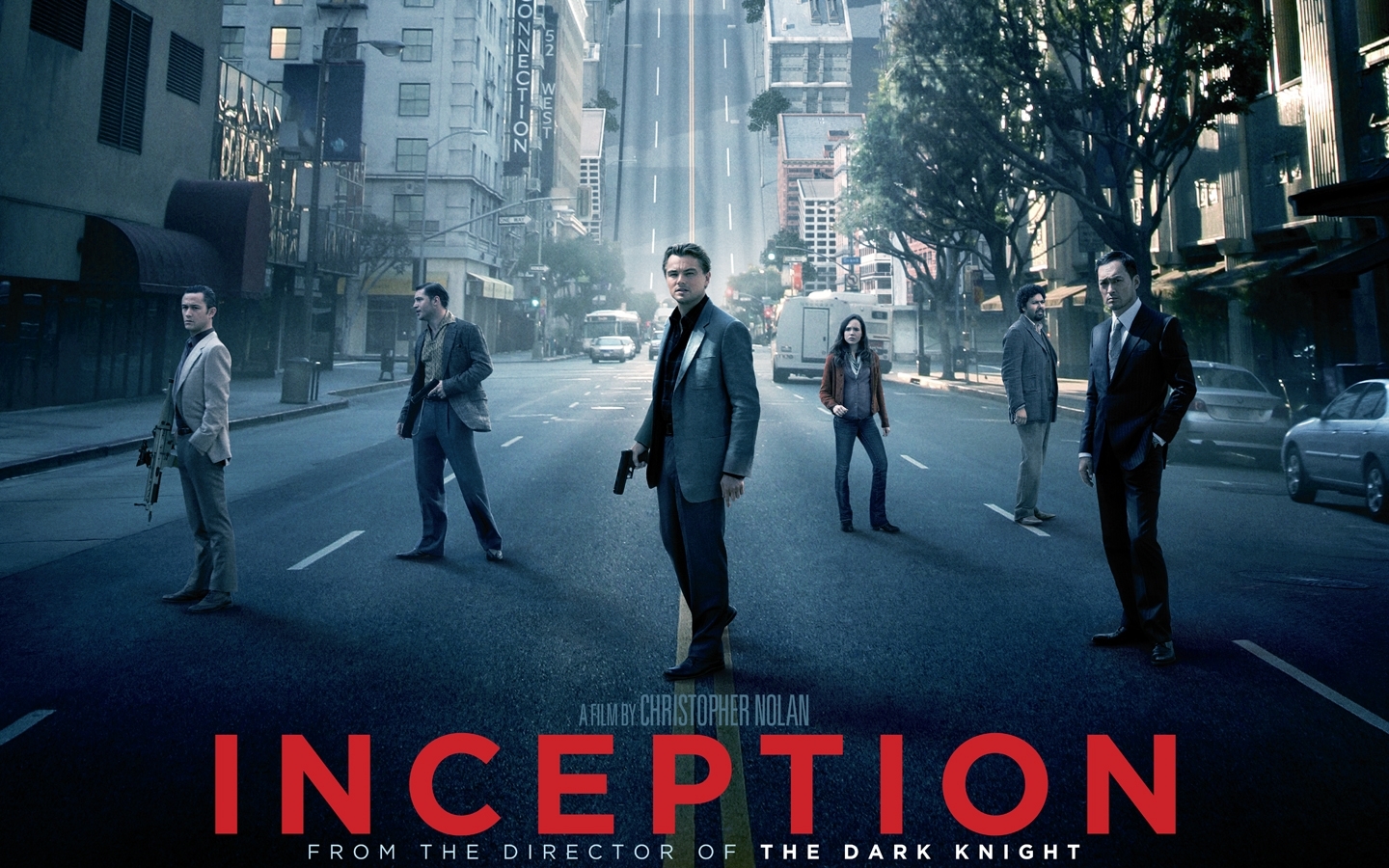
 The point of advertising is to try convince the consumer that they want something that they don't necessarily need. Movie advertising is kind of the same way: it's to convince people that a movie is maybe better than it actually is. And truth be told, on some occasions, the movies linked to the ads are about as good as we hope they are.
But look at District 9. Last summer I was travelling through Pennsylvania where we stopped at a McDonald's for lunch and, on the side of my drink cup, was an alien with an X through it and a logo that said No Alien Zone or something like that. I had no idea what District 9 was about at the time (only knew of it by name) but in that moment I translated that clever bit of advertising into expectation of a great movie. After all, a movie advertised this cleverly must be just as clever no? Well District 9 was clever, but not enough to be more than simple summer entertainment. However, by that point it didn't matter if the movie was good or not. The hype machine has spun its wheels and the ads had done their job and people, despite the film's many misgivings, was deemed to be great.
I hate basing my expectations for movies off of ads and trailers and whatever other lines we are fed before the mass public has even gotten a chance to see it. Although I expect Inception to be a great film, I will still go into it this Tuesday with a blank critical slate. I want it to be great, but I'm prepared for it not to be as well. A lot of bloggers are saying it is in fact great. Some of these people I respect and some I don't. One critic who I do respect, David Edelstein, said it wasn't. He didn't like The Dark Knight either. That's fair. Even though I thought the Dark Knight was the best film of the year two years ago, in a sense, I had more respect for Edelstein for turning in a negative review, losing the film its 100% rating on Rotten Tomatoes, because it showed that he had at least stopped and thought through the movie. He's not a contrarian critic like say Armond White. If David Edelstein says a movie doesn't work he must have (his own) good reasons.
I haven't read the Inception review in question yet because I don't read any in full before I have my own on paper, but here's the point: Edelstein was hung out to dry by both peers and viewers alike for his review of the Dark Knight. He's caught flack again for his Inception review (despite it now only sitting at 83% on RT). But why? Just because everyone says Inception is a great movie, Edelstein is a lousy critic for looking inside himself and not finding reasons to agree? The problem is, as I maybe alluded to before, Inception (along with Tarantino and Scorsese films and many others) are advertised as great films, and people buy into that. I'm not trying to pass judgement on Inception for I have yet to see it or anyone who wrote a good positive review of it, but once people build anticipation, once the hype starts rolling, people stop thinking about the reasons why movies are great and instead just accept that, well, it looks great, everyone says Christopher Nolan is a great director, it must be great, and so on down the line.
Too often we as movie fans let this laziness hang over us because it's easier and quicker than dealing with a movie and all it's parts. We fail to form true opinions and argue them fully and, to another extent, we fail to understand film itself. What if, and you never know, Edelstein is the only right opinion across the board? I'm sure the people who rushed to the battle lines never took that into consideration first?
I'll explain with an example. I took a first year film class which had both Memento and Antionioni's Blow-Up on the syllabus. People left the Blow-Up screening in anger. No one knew what to do with it and thus passed it off as garbage. I didn't like it either, but I wasn't satisfied with my dislike of it; that was too easy, and once I began to deal with it, deconstruct it and build it back up in my mind, it revealed itself as a great film and I understood why it was such. Everyone, of course, loved Memento but, you know what, it's not a great film. It's an entertaining one where a young director is playing with plot gimmicks, but it's not a lot more. Once you break it down you're left with nothing really but a hip, stylish, post-modern film noir that people like because it is "different."
Nolan has, of course, with Batman Begins, proved that he was a great director, solidified it with The Prestige and made sure the title was sticking for good with The Dark Knight. I expect he will continue on in that tradition with Inception but, you never know. The first step is being courageous enough to admit that.
I guess what I'm saying is, what happened to the days before trailers, when people went to films because they wanted to know if they were good or not and they broke film down in order to talk intelligently about it? Did that die with Pulp Fiction when people started liking it just to let everyone know how hip they are? I'd love to read a good review that called Goodfellas one of the worst movies ever made and justified such a bold stance because it would mean, if nothing else, that at least someone took the time to think about a film intelligently and share what they found. That's more admirable, I think, than another person on the heap saying that Goodfellas or anything else is good because, ya know, Scorsese is God, it's different, it's hip, it's got good dialogue, etc. You can get those conversations around any watercooler. Shouldn't we, as critical voices, be using our medium for something of more substance, or is that too much of an inconvenience?
What do you think?
The point of advertising is to try convince the consumer that they want something that they don't necessarily need. Movie advertising is kind of the same way: it's to convince people that a movie is maybe better than it actually is. And truth be told, on some occasions, the movies linked to the ads are about as good as we hope they are.
But look at District 9. Last summer I was travelling through Pennsylvania where we stopped at a McDonald's for lunch and, on the side of my drink cup, was an alien with an X through it and a logo that said No Alien Zone or something like that. I had no idea what District 9 was about at the time (only knew of it by name) but in that moment I translated that clever bit of advertising into expectation of a great movie. After all, a movie advertised this cleverly must be just as clever no? Well District 9 was clever, but not enough to be more than simple summer entertainment. However, by that point it didn't matter if the movie was good or not. The hype machine has spun its wheels and the ads had done their job and people, despite the film's many misgivings, was deemed to be great.
I hate basing my expectations for movies off of ads and trailers and whatever other lines we are fed before the mass public has even gotten a chance to see it. Although I expect Inception to be a great film, I will still go into it this Tuesday with a blank critical slate. I want it to be great, but I'm prepared for it not to be as well. A lot of bloggers are saying it is in fact great. Some of these people I respect and some I don't. One critic who I do respect, David Edelstein, said it wasn't. He didn't like The Dark Knight either. That's fair. Even though I thought the Dark Knight was the best film of the year two years ago, in a sense, I had more respect for Edelstein for turning in a negative review, losing the film its 100% rating on Rotten Tomatoes, because it showed that he had at least stopped and thought through the movie. He's not a contrarian critic like say Armond White. If David Edelstein says a movie doesn't work he must have (his own) good reasons.
I haven't read the Inception review in question yet because I don't read any in full before I have my own on paper, but here's the point: Edelstein was hung out to dry by both peers and viewers alike for his review of the Dark Knight. He's caught flack again for his Inception review (despite it now only sitting at 83% on RT). But why? Just because everyone says Inception is a great movie, Edelstein is a lousy critic for looking inside himself and not finding reasons to agree? The problem is, as I maybe alluded to before, Inception (along with Tarantino and Scorsese films and many others) are advertised as great films, and people buy into that. I'm not trying to pass judgement on Inception for I have yet to see it or anyone who wrote a good positive review of it, but once people build anticipation, once the hype starts rolling, people stop thinking about the reasons why movies are great and instead just accept that, well, it looks great, everyone says Christopher Nolan is a great director, it must be great, and so on down the line.
Too often we as movie fans let this laziness hang over us because it's easier and quicker than dealing with a movie and all it's parts. We fail to form true opinions and argue them fully and, to another extent, we fail to understand film itself. What if, and you never know, Edelstein is the only right opinion across the board? I'm sure the people who rushed to the battle lines never took that into consideration first?
I'll explain with an example. I took a first year film class which had both Memento and Antionioni's Blow-Up on the syllabus. People left the Blow-Up screening in anger. No one knew what to do with it and thus passed it off as garbage. I didn't like it either, but I wasn't satisfied with my dislike of it; that was too easy, and once I began to deal with it, deconstruct it and build it back up in my mind, it revealed itself as a great film and I understood why it was such. Everyone, of course, loved Memento but, you know what, it's not a great film. It's an entertaining one where a young director is playing with plot gimmicks, but it's not a lot more. Once you break it down you're left with nothing really but a hip, stylish, post-modern film noir that people like because it is "different."
Nolan has, of course, with Batman Begins, proved that he was a great director, solidified it with The Prestige and made sure the title was sticking for good with The Dark Knight. I expect he will continue on in that tradition with Inception but, you never know. The first step is being courageous enough to admit that.
I guess what I'm saying is, what happened to the days before trailers, when people went to films because they wanted to know if they were good or not and they broke film down in order to talk intelligently about it? Did that die with Pulp Fiction when people started liking it just to let everyone know how hip they are? I'd love to read a good review that called Goodfellas one of the worst movies ever made and justified such a bold stance because it would mean, if nothing else, that at least someone took the time to think about a film intelligently and share what they found. That's more admirable, I think, than another person on the heap saying that Goodfellas or anything else is good because, ya know, Scorsese is God, it's different, it's hip, it's got good dialogue, etc. You can get those conversations around any watercooler. Shouldn't we, as critical voices, be using our medium for something of more substance, or is that too much of an inconvenience?
What do you think?

Showing posts with label Pulp Fiction. Show all posts
Showing posts with label Pulp Fiction. Show all posts
Saturday, July 17, 2010
Buying into the Hype: Why It Doesn't Matter if Inception is Any Good
The point of advertising is to try convince the consumer that they want something that they don't necessarily need. Movie advertising is kind of the same way: it's to convince people that a movie is maybe better than it actually is. And truth be told, on some occasions, the movies linked to the ads are about as good as we hope they are.
But look at District 9. Last summer I was travelling through Pennsylvania where we stopped at a McDonald's for lunch and, on the side of my drink cup, was an alien with an X through it and a logo that said No Alien Zone or something like that. I had no idea what District 9 was about at the time (only knew of it by name) but in that moment I translated that clever bit of advertising into expectation of a great movie. After all, a movie advertised this cleverly must be just as clever no? Well District 9 was clever, but not enough to be more than simple summer entertainment. However, by that point it didn't matter if the movie was good or not. The hype machine has spun its wheels and the ads had done their job and people, despite the film's many misgivings, was deemed to be great.
I hate basing my expectations for movies off of ads and trailers and whatever other lines we are fed before the mass public has even gotten a chance to see it. Although I expect Inception to be a great film, I will still go into it this Tuesday with a blank critical slate. I want it to be great, but I'm prepared for it not to be as well. A lot of bloggers are saying it is in fact great. Some of these people I respect and some I don't. One critic who I do respect, David Edelstein, said it wasn't. He didn't like The Dark Knight either. That's fair. Even though I thought the Dark Knight was the best film of the year two years ago, in a sense, I had more respect for Edelstein for turning in a negative review, losing the film its 100% rating on Rotten Tomatoes, because it showed that he had at least stopped and thought through the movie. He's not a contrarian critic like say Armond White. If David Edelstein says a movie doesn't work he must have (his own) good reasons.
I haven't read the Inception review in question yet because I don't read any in full before I have my own on paper, but here's the point: Edelstein was hung out to dry by both peers and viewers alike for his review of the Dark Knight. He's caught flack again for his Inception review (despite it now only sitting at 83% on RT). But why? Just because everyone says Inception is a great movie, Edelstein is a lousy critic for looking inside himself and not finding reasons to agree? The problem is, as I maybe alluded to before, Inception (along with Tarantino and Scorsese films and many others) are advertised as great films, and people buy into that. I'm not trying to pass judgement on Inception for I have yet to see it or anyone who wrote a good positive review of it, but once people build anticipation, once the hype starts rolling, people stop thinking about the reasons why movies are great and instead just accept that, well, it looks great, everyone says Christopher Nolan is a great director, it must be great, and so on down the line.
Too often we as movie fans let this laziness hang over us because it's easier and quicker than dealing with a movie and all it's parts. We fail to form true opinions and argue them fully and, to another extent, we fail to understand film itself. What if, and you never know, Edelstein is the only right opinion across the board? I'm sure the people who rushed to the battle lines never took that into consideration first?
I'll explain with an example. I took a first year film class which had both Memento and Antionioni's Blow-Up on the syllabus. People left the Blow-Up screening in anger. No one knew what to do with it and thus passed it off as garbage. I didn't like it either, but I wasn't satisfied with my dislike of it; that was too easy, and once I began to deal with it, deconstruct it and build it back up in my mind, it revealed itself as a great film and I understood why it was such. Everyone, of course, loved Memento but, you know what, it's not a great film. It's an entertaining one where a young director is playing with plot gimmicks, but it's not a lot more. Once you break it down you're left with nothing really but a hip, stylish, post-modern film noir that people like because it is "different."
Nolan has, of course, with Batman Begins, proved that he was a great director, solidified it with The Prestige and made sure the title was sticking for good with The Dark Knight. I expect he will continue on in that tradition with Inception but, you never know. The first step is being courageous enough to admit that.
I guess what I'm saying is, what happened to the days before trailers, when people went to films because they wanted to know if they were good or not and they broke film down in order to talk intelligently about it? Did that die with Pulp Fiction when people started liking it just to let everyone know how hip they are? I'd love to read a good review that called Goodfellas one of the worst movies ever made and justified such a bold stance because it would mean, if nothing else, that at least someone took the time to think about a film intelligently and share what they found. That's more admirable, I think, than another person on the heap saying that Goodfellas or anything else is good because, ya know, Scorsese is God, it's different, it's hip, it's got good dialogue, etc. You can get those conversations around any watercooler. Shouldn't we, as critical voices, be using our medium for something of more substance, or is that too much of an inconvenience?
What do you think?

Wednesday, May 26, 2010
Greatest Movies That Made Going to the Movies Suck #4 Pulp Fiction

 So, Pulp Fiction. It is a title that is synonymous with wit, absurdity, violence, vulgarity, and all around brilliance. A film this original, smart, and consistently entertaining only comes around every so often, and when it does, it ignites a firestorm of praise and mayhem! Quentin Tarantino's meisterverk did just that. Before Pulp Fiction, no one had really seen anything of the sort. Characters had never talked that way; events like that had never occurred. Plots were a strictly linear affair, and changing it up and going back and forth in the timeline of the film was unheard of. The vulgarity was never so vulgar, the violence was never so violent, and the comedy was never so comic, as it was in Pulp Fiction. It proved to be uber popular, winning the Palme d'Or at that year's Cannes festival, raking in tons of cash, and winning the Best Original Screenplay Oscar. It took the world by storm, which, depending on how you look at it, was a blessing and a curse. On the one hand, Tarantino had ushered in a new era of movie making, one that celebrated the conventions and reveled in prolonged, elaborate stories. On the other hand, it quickly became apparent, as various writers and directors attempted to emulate this style, that filmmakers like Tarantino were a rare breed. To this day, he is still the master of his craft. No one has come close to touching him.
From the very first shot of Pulp Fiction, where Tim Roth and Amanda Plummer talk about the various methods of robbery over coffee, you know you are for something special. Immediately, you are whisked on a bizarre and fascinating journey involving a pair of bible spewing hitmen, their boss, his trophy wife, the down and out boxer he paid off, his girlfriend, a drug dealer, and a suitcase with an ominous golden light coming from it. What made Pulp Fiction standout in my mind, even more then Tarantino's less known debut, Reservoir Dogs, is how it takes its sweet time to get to the point.
The first big segment sees Samuel L. Jackson's Jules Winfield and John Travolta's Vincent Vega heading off to a job at the behest of their boss, Marcellus Wallace. On their way, they talk about, in no particular order, the city of Amsterdam's policies on the distribution, possession, and use of marijuana, the differences at McDonalds between America and Europe, television, Samoan people, and what it means emotionally to give a woman a foot massage. There are multiple scenes like this, of characters talking about bullshit on their way to big events. It's great! On top of that, the big events are some of the weirdest and most absurd ever seen on film, ranging from an encounter with a pair of rapists and their gimp, to a brush with God, to a frantic and surreal rush to dispose of a dead body. Again, it's great. Also the soundtrack is awesome, and the performances are top notch!
So, what's the problem? Well, Pulp Fiction was a big deal when it came out. Everyone wanted to see it, and the studios noticed this, and they, in all their wisdom, decided to try and mimic whatever it is that Tarantino accomplished. The result was a slew of lackluster, soulless knockoffs that quickly fell into obscurity. The problem was that all the writers and directors thought that all they needed to do was watch Pulp Fiction over and over again, take the words off the screen, mix them around on the page, and they'd be done. What they failed to do was capture the magic that Tarantino was creating. As Roger Ebert so eloquently put it, "they knew the words, but not the music." Films like Things To Do In Denver When You're Dead, Smokin' Aces and Lock, Stock, and Two Smoking Barrels are all examples of mimicking Tarantino's style without first determining what is special about it. They all had quick, witty dialogue, shocking scenes of ultra violence, and curse words up the wazoo. But, they were missing that certain something, and that something is humanity. In pretty much every Tarantino movie, his characters go through redemption, cope with loss, ruin their lives, make terrible decisions, fueled by greed, sadness, or anger, and pay the penalty. This is all layered on to the witty dialogue, ultra violence, and curse words up the wazoo, giving a realism not found in any other filmmakers work. This human aspect is lost in all other films that sought to mimic him. It's all style, but no substance.
So, what's the problem? Well, Pulp Fiction was a big deal when it came out. Everyone wanted to see it, and the studios noticed this, and they, in all their wisdom, decided to try and mimic whatever it is that Tarantino accomplished. The result was a slew of lackluster, soulless knockoffs that quickly fell into obscurity. The problem was that all the writers and directors thought that all they needed to do was watch Pulp Fiction over and over again, take the words off the screen, mix them around on the page, and they'd be done. What they failed to do was capture the magic that Tarantino was creating. As Roger Ebert so eloquently put it, "they knew the words, but not the music." Films like Things To Do In Denver When You're Dead, Smokin' Aces and Lock, Stock, and Two Smoking Barrels are all examples of mimicking Tarantino's style without first determining what is special about it. They all had quick, witty dialogue, shocking scenes of ultra violence, and curse words up the wazoo. But, they were missing that certain something, and that something is humanity. In pretty much every Tarantino movie, his characters go through redemption, cope with loss, ruin their lives, make terrible decisions, fueled by greed, sadness, or anger, and pay the penalty. This is all layered on to the witty dialogue, ultra violence, and curse words up the wazoo, giving a realism not found in any other filmmakers work. This human aspect is lost in all other films that sought to mimic him. It's all style, but no substance.
Every movie about criminals these days owes something to Pulp Fiction. Whether it's the inclusion of two snarky hitmen (In Bruges), multiple, interconnecting story lines (Crash, Snatch), or just an overuse of vulgarity and pop culture references (uhhh... all of them), at some point, the makers were influenced by Pulp Fiction. It's completely understandable. A small, independent movie turns into a pop culture phenomenon, and suddenly, everyone is attempting to cash in on the craze, whether they know it or not. Tarantino awoke a vicious monster the day he premiered his tale of violence and redemption, and, so far, he is the only one who knows how to tame it.
Subscribe to:
Posts (Atom)