Tuesday, May 10, 2011

Something Borrowed


Something Borrowed starts with a problem right out of the gate. Let’s explain the story first. Rachel (Ginnifer Goodwin) and Darcy (Kate Hudson) are best friends and have been so for just about all their lives. Rachel has just turned 30 and Darcy is engaged to Dex (Colin Egglesfield, doubling for Tom Cruise circa 1985) who went to law school with Rachel. Thing is, as these things must go, the passive Rachel never told the hunk Dex that she was madly in love with him because, well, guys like him aren't interested in girls like her, despite the fact that he never told her that he felt the same. Now he’s with Darcy, the loud, alcohol swilling, extrovert, but having doubts and no one knows what to do, especially after he sleeps with Rachel.

The problem is that Darcy is so insufferably stupid, selfish and vain that there is never one reason to honestly believe that Rachel would be best friends with her or Dex would want to marry her. The point of a plot like this is the tension created by the common moral dilemma of wanting what’s right for all of the characters but not quite knowing what that should be. In this case the answer is simple: Dex should tell Darcy the truth about Rachel and both of them should get the hell away from her as quickly as possible and live happily ever after.

But as the plot continues to twist and turn upon itself one realizes that not since Closer have three characters so thoroughly deserved one another. Something Borrowed is so clueless that it wraps all of this up into a what is supposed to be accepted as a cute little romantic comedy although it’s hard to laugh at people who are so dumb, so oblivious and just make you want to run up to them, grab them firmly by the shoulders and smack some sense into them.

There’s also a fourth character, Ethan, played by The Office’s John Krasinski who is a friend of Rachel, male, single, not gay and apparently only along for the ride to be charming support. Right. Krasinski could indeed be charming in his sleep and in turn walks away with the film, but apparently neither Ethan nor Rachel have seen any bad romantic comedies before because if they did they would recognize that whenever a name is cast in a major role, especially the fourth player in a love triangle story, they ain’t around to sit and watch from the sidelines. And if you consider that a spoiler you're giving the movie too much credit and yourself not enough.

But of course neither of them knows that, because nobody in this movie knows anything. The story, taken from the New York Times Bestseller of the same name, revolves around what Roger Ebert commonly refers to as the Idiot Plot in which twists and turns are laid upon one another despite the logical realization that if just one character would say one thing the entire story would crumble to pieces and a lot of headaches would be saved.

The movie was written by Jennie Snyder whose previous work has all been in TV, which makes sense as she constantly pushes the characters around into different directions with no real insight or clear vision of where any of this is going, except to build to a cliff-hanger before breaking for next week’s episode. We are therefore treated to sloppy, incompetent plotting. Take for example Ethan’s big scene, the only honest one in the entire movie, where he reveals something that should naturally take the plot into its logical conclusion, only to have him drop completely out of the film. But of course, God forbid any of these characters redeem themselves and their stupid, foolish actions and end up with the person they actually should be with.

In essence, for a story like this to work, which keeps getting more and more complex as each new revelation pops up, it needs to be tied around an object, which is something that keeps the story grounded and acts as its centre. The plot of Something Borrowed is woven around a ball of smoke which quickly evaporates as the film weaves an emotional tapestry around nothing at all until it arrives at a conclusion that I won't reveal but that I'll tell you is dead wrong. But hey, some people: if they don't know, ya can't tell 'em.

Wednesday, May 4, 2011

Fast Five


Fast Five ends with a chase sequence about as ridiculously improbable as you can imagine. It involves two cars and a huge safe chained to the back of both of them. They speed down the streets of downtown Rio, where there is remarkably little traffic in the way, while every corrupt police officer in the city is in hot pursuit.

Logic dictates that this is not humanly possible; that the safe would be so heavy that it surely it would jerk the cars right off the road. Yes it would, and don’t call me Shirley.

The point is, there’s a lot of stupid stuff that happens in Fast Five, and it’s to be cherished. Bad movies will leave you with no other desire than to pick them apart; their every idiocy glaring. But a good movie will leave you having too much fun to care and Fast Five is high-wire, pedal-to-the-metal, guilty pleasure type stuff. Finally someone got the memo that action movies can be fun again. The thing to cherish about the first 2 Fast & Furious movies was that they had A-movie budgets with B-movie minds. They didn’t have a brain in their head and made that a quality not a downfall. The series has finally found that again.

It also helps that director Justin Lin (behind the wheel so-to-speak for the third time) has finally mastered the car chase. It’s a delicate art and although Lin’s hand is not as smooth and assured as Rob Cohen or John Singleton before him, he’s finally learned, after the depressingly awfule Fast & Furious, the value of the long shot and how it’s okay to be able to see everything that is going on.

The most important element at work here is also that Lin finally appreciates the importance of distance and space.

Chase sequences work off the premise that, first, the audience feels motion, which is created by swift and extended camera moves and logical editing that creates some sort of reality so that we understand where all the players are in the action and where they are in relation to one another. The importance of camera movement is that action works on the excitement of motion and since the audience’s only connection to the action is that camera, the camera must work with what it is capturing in order to give the audience the sensation of being part of the movement.

The second thing action must do is create danger. One of my favourite action movie shots is in Casino Royale as James Bond chases a baddie atop a high crane is Madagascar. The camera flies in with a shot of the crane as the pursuit goes on. The shot is long and wide and flies over top of the hero with the ground always being visible. It’s more exciting than anything else I can think of. They are really up there and they could really fall.

Fast Five opens with an amazing action sequence that involves stealing cars off a speeding train. You know you're in good hands when you get the wide shot as the camera flies in towards the train. As cars are taken off the locomotive in an ingenious and improbable scheme we see all the possibilities from all sides: the ground speeding by below, the desert landscape, the bridge coming up, the drop just beyond it. The real stuff that could kill you that exists outside of this impossible moment. It’s the perfect package. That’s action.

The reason I bring boring old theory into the equation to discuss Fast Five is that a film such as itself needs theory as the only way to justify such ridiculousness. This is a film in which men ramp cars out of speeding trains, take free falls over cliff sides, jump from rooftop to rooftop, barge through concrete walls and glass panes in rabid fist fights and yes, drag a safe down the streets of Rio. If it wasn’t made well it would be a disaster. It’s made very well, with a wink and a nod, and we cherish, not only that we needn’t take it too seriously, but that it takes itself just seriously enough to be made with precision and quality. The film knows what it's doing.

So now the story in brief: After springing Domenic Toretta (Vin Diesel) out of jail he and O’Conner (Paul Walker) escape to Rio where they plan on doing one last job (the train job). Problem is, they partner with a local drug kingpin who has every corrupt cop in Rio in his back pocket so when the job goes south it leads to two subplots, one of which is exciting and the other, at 130 minutes running time, is overkill. The first is that the men, on the run from the Rio goons decide it will be their really last job to rob the kingpin of his savings which is kept in a safe at the local police station. They call up colleagues from former endeavours along with some new faces and get a team together.

Meanwhile, the cars stolen belonged to the Feds so they ship in Hobbs (Dwayne Johnson),a tough-as-nails, no BS, get-the-job-done type of cop who’s t-shirt always seems about 2 sizes too small over his bursting muscles and who's forehead always looks like it just came out of a torrential downpour. Although Johnson’s presence into the serious is more than welcome and he plays Hobbs on that thin line between driven and comedy (walking away with the film’s best line), he feels like an afterthought and spends the entire middle section of the film off screen.

There’s only really so much you can say about a film like Fast Five. Either you buy it and go along for the ride or you don’t. Maybe what I cherish most about this series is that A) Lin injects a nice amount of human scenes into the film that allow it to slow down, take a breather and make us care about the characters and (B), when it gets fired back up, even though it does employ CGI, for the most part the stunts and chases feel authentic. They may be ridiculous, but we feel like they are actually happening. And really if you don’t know what your going to get by the fifth time around you maybe never will. I went in looking for a hell of a ride. That’s about what I got.

Sunday, May 1, 2011

One MInutes Review - NIghtmare on Elm Street

No one, I think, with a logical mind will be able to accept anything that happens in the remake of Wes Craven's popular slasher flick Nightmare on Elm Street. That was a problem with the original too, but at least that one had a sense of fun about it and was derived from an interesting concept. This new one pads all of it's illogical wanderings with a cold and ugly palette to boot.

The problem is Freddy Kruger. He doesn't make sense and with no rules to govern his existence and power he's less a horror movie villain and more a convenience for a screenwriter who wants to make it up as he goes along. The first scene takes place in a diner. A kid follows a waitress into the back only to find Kruger. He wakes up at his table, his hand bleeding from the dream attack. This scene of course presupposes (maybe correctly, but regardless) that everyone will be familiar with the character and understand his existence. Then the kid is greeted by a teen girl. He tells her he hasn't slept in 3 days until nodding off and stabbing himself in the throat in front of her.

Now here's the kicker. After the funeral, 3 other teenagers all start getting haunted in their sleep by Kruger. If we're to believe the plot (Spoilers if you care) they have all, unbeknowst to them, known each other since grade school, where they all came into contact with Kruger before he was murdered by their parents. Weird. Have they not been sleeping since; did they just not realize Kruger was in their dreams until today; or did he just magically decide that hey, now that one's dead, I might as well take the other 3 now as well?

This is all wrapped up into an incoherent mess by a music video director who directs the film as if each dream is one in a sequence of vignettes until each teen is picked off one by one by this mysterious force who comes and goes as he wishes, follows no logical arch as a character and goes through the motions that we've all been accustomed to since the original film dropped in the 80s.

Monday, April 25, 2011

Source Code


Colter Steven (Jake Gylllenhaal) wakes up on a train across from a woman (Michelle Monaghan) he doesn’t know. She calls him Sean. He doesn’t know what she’s talking about but she seems to know him. He tells her he isn’t who she thinks he is. He gets up, marches around, unsure of where he is or how he got there. He goes to the bathroom and sees someone else’s expression in the mirror. Outside the door waits Christina, that woman. They bicker a bit and then the train blows up, killing everyone on board.

That’s the set up for Source Code, the newest film from Duncan Jones (son of David Bowie) who also helmed the popular Moon a couple years ago. There’s a lot of ways to read into a film like Source Code. You could read it in terms of God or religion or science or evolution or quantum physics or even psychology. I’d like to read it as entertainment. That is, after all, what it is. That it has more depth and intelligence than most blockbusters these days is a little added bonus and is, in truth, what makes it all the more entertaining.

Stevens wakes up in what looks like the cockpit of a crashed fighter jet. He doesn’t immediately know where he is but is quickly greeted over a monitor by Goodwin (Vera Farmiga, the lovely actress from Up in the Air) who jogs his memory and isn’t quite willing to explain to him what is going on. As a solider, he’s wondering where his men are, if he can speak to his father, and why he is stuck here instead of off in battle. There isn’t much time and so he’s jolted back onto the train to live it all over again.

Stevens is eventually briefed by Dr. Rutledge (invaluable character actor Jeffry Wright) that he is involved in an experiment called Source Code, which is based on a quantum theory that there is roughly 8 minutes that exist in the mind after death or something like that. Therefore, because Stevens is so close a match to this Sean fellow, they can blast him back 8 minutes before the man’s death in order to see just what happened. It’s not time travel, as Colter can’t change anything, but he can figure out who the bomber is and let them know so he can be stopped before another, even bigger attack is staged.

That’s as far as I’ll go with plot. You can discover the rest of the nuances and twists on your own. Is Source Code possible? Maybe, especially if you're one of those few who were spoken to by that narrative documentary What the Bleep do we Know? in which quantum mechanics are attempted to be broken down in such a way that the everyday mind could understand. But now that doesn’t much matter. What’s important is that it makes for intriguing suspense.

The preposterousness (and all science fiction must rightfully come with some degree of preposterousness) of Source Code works because the film rightly defines its science. It thus lays down a ground work for something that is given rules and definition and works in creating some sort of believable story. Some sci-fi tends to allow the science to run off with itself and just makes it up as it goes along. Discipline is the key here.

The film’s enjoyableness is in no small part due to the presence of its star Gyllenhaal who is becoming, one film at a time, a star amidst the likes of Brad Pitt or George Clooney: pretty faces who can fit comfortably into a wide assortment of roles. Find me an actor with the versatility to play in such widely different films as Prince of Persia, Love and Other Drugs, Brothers and Jarhead and you'll find talent.

The intrigue of Source Code, from a structural point of view is that, by breaking itself down into repeating 8 minute intervals, it creates the kind of gnawing suspense that is created from the frustration of playing an impossible level of a video game. You keep using up your continues, trying it a little different each time, yelling, screaming, cursing the game the yet never putting it down or finding satisfaction until you prove to it that not only can it be beat, but that it can be beat by you.

Source Code thus exits in what appears to be a string of recent sci-fi films that approach their intriguing subject matter with intelligence and a knack for storytelling. This arguably began last year with Inception which, despite all of it’s flaws, to be fair, exists on a level all unto itself, and has been followed with the Adjustment Bureau, this one and Rian Johnsons upcoming Looper with Bruce Willis and Joseph Gordon-Levitt. It’s not a major work, and it ends about 4 or 5 shots later than it justifiably should, but, it’s a smart and thrilling ride of the variety that seem to be becoming rarer and rarer on the big screen.

Thursday, April 21, 2011

The Celebrity Connection: Kate Beckinsale

So I watched 30 Days of Night: Dark Days today. I normally wouldn't watch direct to video sequels, especially of movies I didn't like the first time around, but I covered the script to this one almost a year ago and you can just about guarantee that if I've read the script, I'll check out the finished product regardless. Watching it though I noticed something:


Could Mia Kirshner actually be Kate Beckinsale in disguise? You decide.

Monday, April 11, 2011

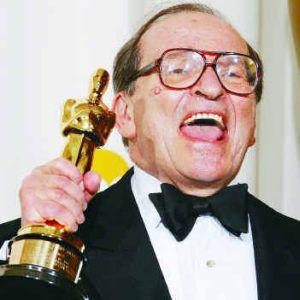
In Memory of Sidney Lumet

I don't often write these posts over fallen heroes because it's a challenge to make a meaningful one when it seems like half the internet has already idolized the deceased before their last breath has even sounded. Regardless, Sidney Lumet is an exception.


In this case, it's special because Lumet is not some tragic case and his death doesn't sound out any sorrow in me (he was 86 at the time of his death and was responsible for more great films than some whole careers even get to make). Instead it's a way to look back and bask in the memories of one man who dedicated his life to making so many amazing movies.

What makes Lumet even more special for me is that, believe it or not, no one single person changed the way I view movies more than Sidney Lumet did. It all stems from his book simply titled Making Movies. Roger Ebert said that if you only read one book on filmmaking, make it that one and I second this.

This is a book as quotable as any great critic such as Kael, Farber, Bazin or even Ebert himself and is an intimate, loving and thoroughly technical analysis of film as seen through the eyes of the artist creating it.

Maybe most valuable is Lumet's chapter on style which is, to me, the single greatest piece ever written on the subject. Lumet dissects style (the most misused word in film as he calls it) in a way that is profound and makes sense. It made me realize that filmmakers like Burton and Gilliam are not stylists but decorators and that, most importantly, as the French also used to say, you cannot separate style from substance nor substance from style. The two create each other and together make something wonderful.

The example Lumet gives is of his debut masterpiece 12 Angry Men, taking place entirely in one room, starting by filming in close up and gradually pulling the camera back and moving it down so that you can begin to see the ceiling; feeling as though the room is closing in as the tension mounts. The final shot, outside the room, is thus placed high and filmed with a wide lense to allow the sense of relief. You don't notice it, but you feel it, because it makes sense to the story. That's film style.

That was the birth of a career that produced the big names like Serpico, Running on Empty, The Pawnbroker, Prince of the City, Dog Day Afternoon, Network, The Verdict, A Long Day's Journey into Night and most recently Before the Devil Knows Your Dead. These come alongside the titles that are not considered as major but still bear the worth to warrant the accolades: Murder on the Orient Express, The Wiz, Equus, Family Business, Q&A, Night Falls on Manhattan, Critical Care and Find Me Guilty, which featured Vin Diesel's best performance.

I think what characterised Lumet's body of work was not some consistent visual style (he gave the movie what it needed like a natural technician) but that he was drawn to intelligent works about intelligent people: often men torn between doing what they believe to be right and doing what's actually best. His movies were not about action and weren’t flashy just for the sake of it; (save The Wiz, which is one of the odd one's out in his oeuvre) but are built upon the suspense of human interaction, of internal drama and of real danger.

Lumet openly admits in his book that some projects he took on just for the money. That's fine, it's not too hard to guess which films fall under that banner, but regardless Lumet always brought style and smarts to them. Lumet made bad films but he didn't often make boring ones.

Thus, I can't shed a tear for Lumet even though I'm sad to see him go. I'm too busy smiling while looking back and remembering everything he left us. America may have lost one of it's last remaining greats but the movies will live on forever.

Wednesday, March 30, 2011

One Minute Review - Eat Pray Love

Eat Pray Love is about as simple and unassuming as it's title suggests. Of course it is. It's another example of putting stars into big movies and sending them out into the world to find no real dranger or drama. It happened with Brad Pitt in Seven Years in Tibet, Patrick Swayze in City of Joy and now it happens to Julia Roberts here. So what we are left with is a half hearted story in which a white woman travels to three places around the world to do exactly what's in the title after having a mid-life crisis of sorts. Conviently for her she always manages to bump into another American along the way or, when she runs across a foerigner, luckily enough, it is Javier Bardem.

Eat Pray Love was adapted from a best seller by Elizabeth Gilbert who is either the most boring of travelers or the victim of a poor, predictable adaptation. If, along the way, Gilbert achieved something profound in her personal journey, the remnants of it are not to be found here.

Maybe it's the fault of writer/director Ryan Murphy (of Glee fame) who overshoots and understuffs. Murphy has a way of confusing movement with artistry and bigness for something profound. Along with his cinamatographer, Murphy has the camera swoop and swirl and push in and push out and spin around from above, trying to make a lack of material seem big enough to inhabit its own running time. Take a scene in which Roberts, having come from a meeting with her laywer and husband over their divorce, comes upon her husband in the elevator. Instead of allowing a quite moment to pass between them Muphy lets the camera rapidly push in on her and then cuts immediatly to it doing the same thing on him. A small moment is forced to become a big moment and the impact is lost by being underlined. Stretch that to 2 and a half hours and you have about the effect of Eat Pray Love.