Monday, April 25, 2011

Source Code


Colter Steven (Jake Gylllenhaal) wakes up on a train across from a woman (Michelle Monaghan) he doesn’t know. She calls him Sean. He doesn’t know what she’s talking about but she seems to know him. He tells her he isn’t who she thinks he is. He gets up, marches around, unsure of where he is or how he got there. He goes to the bathroom and sees someone else’s expression in the mirror. Outside the door waits Christina, that woman. They bicker a bit and then the train blows up, killing everyone on board.

That’s the set up for Source Code, the newest film from Duncan Jones (son of David Bowie) who also helmed the popular Moon a couple years ago. There’s a lot of ways to read into a film like Source Code. You could read it in terms of God or religion or science or evolution or quantum physics or even psychology. I’d like to read it as entertainment. That is, after all, what it is. That it has more depth and intelligence than most blockbusters these days is a little added bonus and is, in truth, what makes it all the more entertaining.

Stevens wakes up in what looks like the cockpit of a crashed fighter jet. He doesn’t immediately know where he is but is quickly greeted over a monitor by Goodwin (Vera Farmiga, the lovely actress from Up in the Air) who jogs his memory and isn’t quite willing to explain to him what is going on. As a solider, he’s wondering where his men are, if he can speak to his father, and why he is stuck here instead of off in battle. There isn’t much time and so he’s jolted back onto the train to live it all over again.

Stevens is eventually briefed by Dr. Rutledge (invaluable character actor Jeffry Wright) that he is involved in an experiment called Source Code, which is based on a quantum theory that there is roughly 8 minutes that exist in the mind after death or something like that. Therefore, because Stevens is so close a match to this Sean fellow, they can blast him back 8 minutes before the man’s death in order to see just what happened. It’s not time travel, as Colter can’t change anything, but he can figure out who the bomber is and let them know so he can be stopped before another, even bigger attack is staged.

That’s as far as I’ll go with plot. You can discover the rest of the nuances and twists on your own. Is Source Code possible? Maybe, especially if you're one of those few who were spoken to by that narrative documentary What the Bleep do we Know? in which quantum mechanics are attempted to be broken down in such a way that the everyday mind could understand. But now that doesn’t much matter. What’s important is that it makes for intriguing suspense.

The preposterousness (and all science fiction must rightfully come with some degree of preposterousness) of Source Code works because the film rightly defines its science. It thus lays down a ground work for something that is given rules and definition and works in creating some sort of believable story. Some sci-fi tends to allow the science to run off with itself and just makes it up as it goes along. Discipline is the key here.

The film’s enjoyableness is in no small part due to the presence of its star Gyllenhaal who is becoming, one film at a time, a star amidst the likes of Brad Pitt or George Clooney: pretty faces who can fit comfortably into a wide assortment of roles. Find me an actor with the versatility to play in such widely different films as Prince of Persia, Love and Other Drugs, Brothers and Jarhead and you'll find talent.

The intrigue of Source Code, from a structural point of view is that, by breaking itself down into repeating 8 minute intervals, it creates the kind of gnawing suspense that is created from the frustration of playing an impossible level of a video game. You keep using up your continues, trying it a little different each time, yelling, screaming, cursing the game the yet never putting it down or finding satisfaction until you prove to it that not only can it be beat, but that it can be beat by you.

Source Code thus exits in what appears to be a string of recent sci-fi films that approach their intriguing subject matter with intelligence and a knack for storytelling. This arguably began last year with Inception which, despite all of it’s flaws, to be fair, exists on a level all unto itself, and has been followed with the Adjustment Bureau, this one and Rian Johnsons upcoming Looper with Bruce Willis and Joseph Gordon-Levitt. It’s not a major work, and it ends about 4 or 5 shots later than it justifiably should, but, it’s a smart and thrilling ride of the variety that seem to be becoming rarer and rarer on the big screen.

Thursday, April 21, 2011

The Celebrity Connection: Kate Beckinsale

So I watched 30 Days of Night: Dark Days today. I normally wouldn't watch direct to video sequels, especially of movies I didn't like the first time around, but I covered the script to this one almost a year ago and you can just about guarantee that if I've read the script, I'll check out the finished product regardless. Watching it though I noticed something:


Could Mia Kirshner actually be Kate Beckinsale in disguise? You decide.

Monday, April 11, 2011

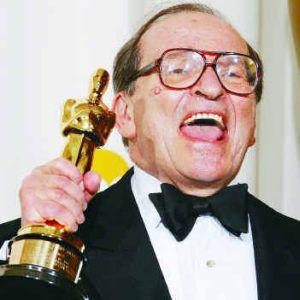
In Memory of Sidney Lumet

I don't often write these posts over fallen heroes because it's a challenge to make a meaningful one when it seems like half the internet has already idolized the deceased before their last breath has even sounded. Regardless, Sidney Lumet is an exception.


In this case, it's special because Lumet is not some tragic case and his death doesn't sound out any sorrow in me (he was 86 at the time of his death and was responsible for more great films than some whole careers even get to make). Instead it's a way to look back and bask in the memories of one man who dedicated his life to making so many amazing movies.

What makes Lumet even more special for me is that, believe it or not, no one single person changed the way I view movies more than Sidney Lumet did. It all stems from his book simply titled Making Movies. Roger Ebert said that if you only read one book on filmmaking, make it that one and I second this.

This is a book as quotable as any great critic such as Kael, Farber, Bazin or even Ebert himself and is an intimate, loving and thoroughly technical analysis of film as seen through the eyes of the artist creating it.

Maybe most valuable is Lumet's chapter on style which is, to me, the single greatest piece ever written on the subject. Lumet dissects style (the most misused word in film as he calls it) in a way that is profound and makes sense. It made me realize that filmmakers like Burton and Gilliam are not stylists but decorators and that, most importantly, as the French also used to say, you cannot separate style from substance nor substance from style. The two create each other and together make something wonderful.

The example Lumet gives is of his debut masterpiece 12 Angry Men, taking place entirely in one room, starting by filming in close up and gradually pulling the camera back and moving it down so that you can begin to see the ceiling; feeling as though the room is closing in as the tension mounts. The final shot, outside the room, is thus placed high and filmed with a wide lense to allow the sense of relief. You don't notice it, but you feel it, because it makes sense to the story. That's film style.

That was the birth of a career that produced the big names like Serpico, Running on Empty, The Pawnbroker, Prince of the City, Dog Day Afternoon, Network, The Verdict, A Long Day's Journey into Night and most recently Before the Devil Knows Your Dead. These come alongside the titles that are not considered as major but still bear the worth to warrant the accolades: Murder on the Orient Express, The Wiz, Equus, Family Business, Q&A, Night Falls on Manhattan, Critical Care and Find Me Guilty, which featured Vin Diesel's best performance.

I think what characterised Lumet's body of work was not some consistent visual style (he gave the movie what it needed like a natural technician) but that he was drawn to intelligent works about intelligent people: often men torn between doing what they believe to be right and doing what's actually best. His movies were not about action and weren’t flashy just for the sake of it; (save The Wiz, which is one of the odd one's out in his oeuvre) but are built upon the suspense of human interaction, of internal drama and of real danger.

Lumet openly admits in his book that some projects he took on just for the money. That's fine, it's not too hard to guess which films fall under that banner, but regardless Lumet always brought style and smarts to them. Lumet made bad films but he didn't often make boring ones.

Thus, I can't shed a tear for Lumet even though I'm sad to see him go. I'm too busy smiling while looking back and remembering everything he left us. America may have lost one of it's last remaining greats but the movies will live on forever.

Wednesday, March 30, 2011

One Minute Review - Eat Pray Love

Eat Pray Love is about as simple and unassuming as it's title suggests. Of course it is. It's another example of putting stars into big movies and sending them out into the world to find no real dranger or drama. It happened with Brad Pitt in Seven Years in Tibet, Patrick Swayze in City of Joy and now it happens to Julia Roberts here. So what we are left with is a half hearted story in which a white woman travels to three places around the world to do exactly what's in the title after having a mid-life crisis of sorts. Conviently for her she always manages to bump into another American along the way or, when she runs across a foerigner, luckily enough, it is Javier Bardem.

Eat Pray Love was adapted from a best seller by Elizabeth Gilbert who is either the most boring of travelers or the victim of a poor, predictable adaptation. If, along the way, Gilbert achieved something profound in her personal journey, the remnants of it are not to be found here.

Maybe it's the fault of writer/director Ryan Murphy (of Glee fame) who overshoots and understuffs. Murphy has a way of confusing movement with artistry and bigness for something profound. Along with his cinamatographer, Murphy has the camera swoop and swirl and push in and push out and spin around from above, trying to make a lack of material seem big enough to inhabit its own running time. Take a scene in which Roberts, having come from a meeting with her laywer and husband over their divorce, comes upon her husband in the elevator. Instead of allowing a quite moment to pass between them Muphy lets the camera rapidly push in on her and then cuts immediatly to it doing the same thing on him. A small moment is forced to become a big moment and the impact is lost by being underlined. Stretch that to 2 and a half hours and you have about the effect of Eat Pray Love. 

Sunday, March 20, 2011

The Adjustment Bureau

Rumor has it that when the original Young Turks of the Cashiers du Cinema gathered years after the fact for a round table discussion one of the topics was with regards to how they had argued so hard towards the director as the artist of his own work that when he was finally given artistic freedom, he didn’t know what to do with it.

That is, in one way or another, the logic behind the Adjustment Bureau as explained by Terrence Stamp’s Thompson in one of those film stealing monologue scenes. It’s that free will is just an illusion. Sure we can chose what tie to wear and what tooth paste to use, but give a person real power over themselves and we get the Dark Ages or World Wars. Thus there is a Chairman who has a plan devised for everyone and when we step off course, he sends his men to give us all a nudge back into fulfilling the destiny that was set out for us.


That’s the story told anyway in the new film of the same name which places Matt Damon and Emily Blunt into, what is essentially an old fashioned melodrama with the ideas surrounding them loosely based on a Phillip K. Dick short story that, just possibly, Alex Proyas also had in mind when he dreamed up his masterpiece Dark City. It’s the foregrounding of this romance that essentially holds the movie together, giving it human momentum within a story that hasn’t been given half as much though by its writer/director George Nolfi as say was given to the aforementioned Dark City or even Inception for that matter. But then again, the old adage still stands: love conquers all.

Damon plays David Norris, a former bad boy turned senate hopeful in New York who looks poised to win until a picture of some former college hijinks is put into print and Norris loses. In the bathroom, before his speech on election night he meets Elise (Blunt) and immediately establishes a connection until she is chased away, no name or number having been given, by a pair of guards looking for her for crashing a wedding upstairs.

Norris, smitten and frustrated, manages a speech that night that is honest and compelling and looks like it will set him on course for a win come next term. Meanwhile, on a bus to his new job, he meets up with Elise and they manage to exchange numbers. However, this wasn’t the plan for Norris who, upon arrival to the office, finds men in suits erasing memories from his co-workers. They give chase but are inescapable. Their hats, we are later told, allow them the power to go through doors and be teleported around the city like magic. It’s a neat trick that doesn’t get much more logical an explanation than this.

Norris is told of this mysterious Chairman and this divine plan that has been written for everyone and is mapped out in convenient animated books which, despite their power, look less impressive and versatile than Ipads. Apparently God hasn’t caught up with the times. But now, reeling myself back in, I’ve gone and made an important assumption that the film wisely doesn’t. These men don’t stand in for angels nor the Chairman for God, although the parallels are there. We know this Chairman, we are told, by many different names and have met him but never know as he appears in a different form to everyone.

The thing is, Norris was never meant to meet Elise and her presence, if a relationship is allowed to develop, will throw both of their destinies off course and will ultimately, if Thompson is to be believed, ruin both of them. Therefore, the agents follow Norris, “nudging” him every once in a while in order to keep him on the fast track to greatness and away from Elise. The logic here though is a bit murky: if the agents need to keep nudging Norris back on track, aren’t they changing also, by doing so, the destinies of those around them, in a Butterfly Effect-like manner? Are there other agents who need to come in and nudge everyone else back on course after an initial nudge? That must require a lot of man power. Maybe in the sequel we can go backstage at the Bureau and see the Chairman going through the recruitment process.

The film is wise in that it doesn’t explicitly draw a religious parallel, which would ultimately ground it in some sort of reality and make it into something it isn’t.

And then the story ultimately becomes a romantic thriller in which Norris, with the help of one optimistic agent played by Anthony Mackie, tries to avert the agents, tries to get back to Elise, even if it means changing the course of his entire life. It’s a nice premise for which Damon and Blunt can cast a likable couple that we generally hope find each other and features a world in which chases are handled by foot and not computers and are filmed in long takes and edited with logic not a blender.

And that’s what you get for your money. Here’s a film that is well acted and made and spreads a little bit of logic in with a little bit of illogic. It doesn’t have the sweep of say Inception, but unlike that film it does have an emotional drive towards some sort of foreseeable end point, which makes it not nearly as compelling but engaging for its own simple, earnest reasons. It won’t provide any food for thought that will justifiably leave anyone discussing it several weeks from now but then again, neither did Inception.

Tuesday, March 1, 2011

The King Spoke and He Said: The Oscars Kind of Sucked This Year

     
  • 2010 will be remembered as the year that nothing worth remembering happened at the Oscars.
  • Anne Hathaway could very well be a great Oscar host with lots of life and energy (if she'd give up the oh my gosh I'm hosting the Oscars references), but what was with James Franco? He looked like that if he didn't go backstage and start cooking up a shot he was going to go into withdrawl.
  • I think the Academy found their host next year in Kirk Douglas.
  • It's sad that the most talked about thing this year was Melissa Leo dropping the F-bomb.
  • There was a moment when Wally Pfister was accepting his award when he thanked Christopher Nolan for being his master and Nolan half smiled as if to say, "Yeah thanks, even though it should be me up there."
  • Apparently Ophrah talking about the human condition did nothing for Joel Cohen who decided he'd rather pick his ear than listen.
  • Randy Newman has been nominated for Best Song 20 times and won twice which is kind of ironic because he essentially made a career out of writing the same song over and over again (to be fair, his songs were one of the things that kept the Princess and the Frog from being great). Out of four nominees, only the 127 Hours song had any personality at all. However, in his attempt to be "good TV" Newman did give one of the funniest and lightest speeches.
  • Tom Hooper managed to make thanking his mom actually sound sweet and meaningful.
  • I have no idea who this kid who won best short feature is, but he's certainly going places.
  • Susanne Bier won an Oscar. This makes me happy. She doesn't get enough credit for what she does.
  • You can tell Aaron Sorkin is a great writer. He gave the most literate and confident speech. He reminds me a bit of David Mamet.
  • I desperately wanted the Social Network to win more awards just so that there could be more hilarious cutaway shots of David Fincher looking completely unimpressed as people thanked him.
  • Was it just me or were Justin Timberlake and Mila Kunis really awkward to watch?
  • The opening montage was so uninspired that I thought for a second I was watching Saturday Night Live
  • The opening monologue wasn't much better. Where is Carrie Fischer when you need her?
  • Billy Crystal managed to revive the show a little and a video was played of Bob Hope doing one of my favourite Oscar lines "Or as it's called at my house: passover," but this was awkwardly melded into a way to introduce Robert Downey Jr. and Jude Law
  • Speaking of: if there has to be 2 hosts, these 2 get my vote for next year.
  • Since when have the honorary Oscar recipients ever been brought on stage and not allowed to make a speech?
  • How did David O. Russell and Christian Bale work together without anyone getting hurt?
  • I got 2 wrong this year and 3 wrong last year. I'm getting better

Sunday, February 27, 2011

The King Will Speak at Tonight's Academy Awards

I write 2 Oscar posts. The one I am doing right now and the one I will write after the show. I personally don't see the need for any more than that because what makes the Oscars fun is the concept of the Oscars and what they represent, which is glamour and old Hollywood excess. It doesn't matter who wins. Winning an Oscar is about the equivalent of picking a name out of a hat (except foreign film). The voter need not see a single one of the nominated films to cast their ballot and they don't even need to be the one doing the voting. So, the awards are meaningless, which is why I don't dwell on them and don't get up in arms over Christopher Nolan not getting nominated or whether or not Toy Story 3 should be allowed to be nominated in Best Picture and Best Animation. Life's too short, let's just enjoy the ride and see how my ability to predict political voting is this year.

Best Foreign Film: This category is always up in the air and one I get wrong because A) I haven't seen all of the movies and B) the voters have to have seen all the movies. Regardless, I'll take my best guess and do what I did last year, going with the Golden Globe choice of Civilization because I think Susanne Bier is a brilliant filmmaker who doesn't get nearly the credit she is due in North America.

Best Animated Feature: The truly best film in this category will not win. Nothing has a shot over Toy Story 3, which made the most money in 2010 and tricked just about everyone into thinking it was a great movie due to 10 minutes at the end.
Who Should Win: The Illusionist
Who Will Win: Toy Story 3

Best Adapted Screenplay: I think this will be one of the categories where the true best will shine and may be one of the only awards, besides Original Score, that the Social Network will walk away with.
Who Should Win: The Social Network
Who Will Win: The Social Network

Best Original Screenplay: I always wonder what the Academy considers to be a good screenplay. Is it the dialogue, the structure, the characters? If it's dialogue and character than Inception doesn't have a chance. Not that it it does anyway. I actually have the insider advantage here as I covered the screenplay for The King's Speech about a year ago and indeed, it was very good. I wonder if I'll get a raise when it wins?
Who Should Win: The King's Speech
Who Will Win: The King's Speech

Best Director: The Golden Globe went to Fincher. The DGA went to Hooper. The DGA usually is the definitive word. If Hooper wins this one, and I think he will, The Social Network doesn't have a chance at best picture as King will probably also sweep the acting awards and Oscar generally doesn't argue with the DGA. Poor Aronofsky. His time will come eventually.
Who Should Win: David Fincher
Who Will Win: Tom Hooper

Best Supporting Actress: This is a tough one. I think we can strike out Jacki Weaver because Animal Kingdom doesn't have the push behind it that would lead to a win. Melissa Leo and Amy Adams could potentially split the vote and cancel each other out for The Fighter, leaving Helena Bonham Carter and Hailee Steinfeld. Oscar loves the British but Steinfeld should win for her scene alone in True Grit between herself and the crooked business man. Last year in the writing category I picked the actual best performance and was wrong so I think I'll go with the obvious this year instead.
Who Should Win: Hailee Steinfeld
Who Will Win: Helena Bonham Carter

Best Supporting Actor: It's down to Christian Bale and Geoffry Rush. Oscar likes weight loss and weight gain but King, I think, is going for a sweep and Oscar almost always votes British so I will too.
Who Should Win: John Hawkes
Who Will Win: Geoffry Rush

Best Actress: I think this one is fairly obvious although I'm not so sure Portman truly was the best, her performance being one part of Black Swan's whole. I found Nicole Kidman in Rabbit Hole to be far more engaging to Portman's "acting" in Black Swan. However, Oscar likes stars who put themselves through physical strain and Portman certainly did that, plus, Kidman gave one of those "quiet" performances that Christina Bale, at the Golden Globes, said no one really ever gets noticed for.Wouldn't it be fun if Oscar pulled a punch and let Anette Benning, who is just as deserving, have the win?
Who Should Win: Nicole Kidman or Anette Benning
Who Will Win: Natalie Portman

Best Actor: Let's continue to vote British.
Who Should Win: Jesse Eisenberg
Who Will Win: Colin Firth

Best Picture: Not much to say here. Once again, despite 10 nominees, just as it always was when there was 5, the race comes down to two. The Social Network was the best movie of the year for me, but the King's Speech is more of an Oscar movie and currently has much more momentum behind it. Plus, if Hooper and Firth win there's no chance for the Social Network to take it.
Who Should Win: The Social Network
Who Will Win: The King's Speech